Finishing a mock test and looking only at the final score is the single most common way to waste a mock test. The score tells you that you lost marks. The review page tells you where and why — and that second part is the part that actually changes your next week of revision.
Taking the test: full mock or one chapter at a time
Every unit on ScoreChem is open with no login needed, and you can test it two ways: a full-length mock covering the whole syllabus, or a short per-chapter test when you just want to check one topic right after finishing its guide. Your results are stored in your browser automatically, so there's nothing to set up before you start — just pick a test and go.
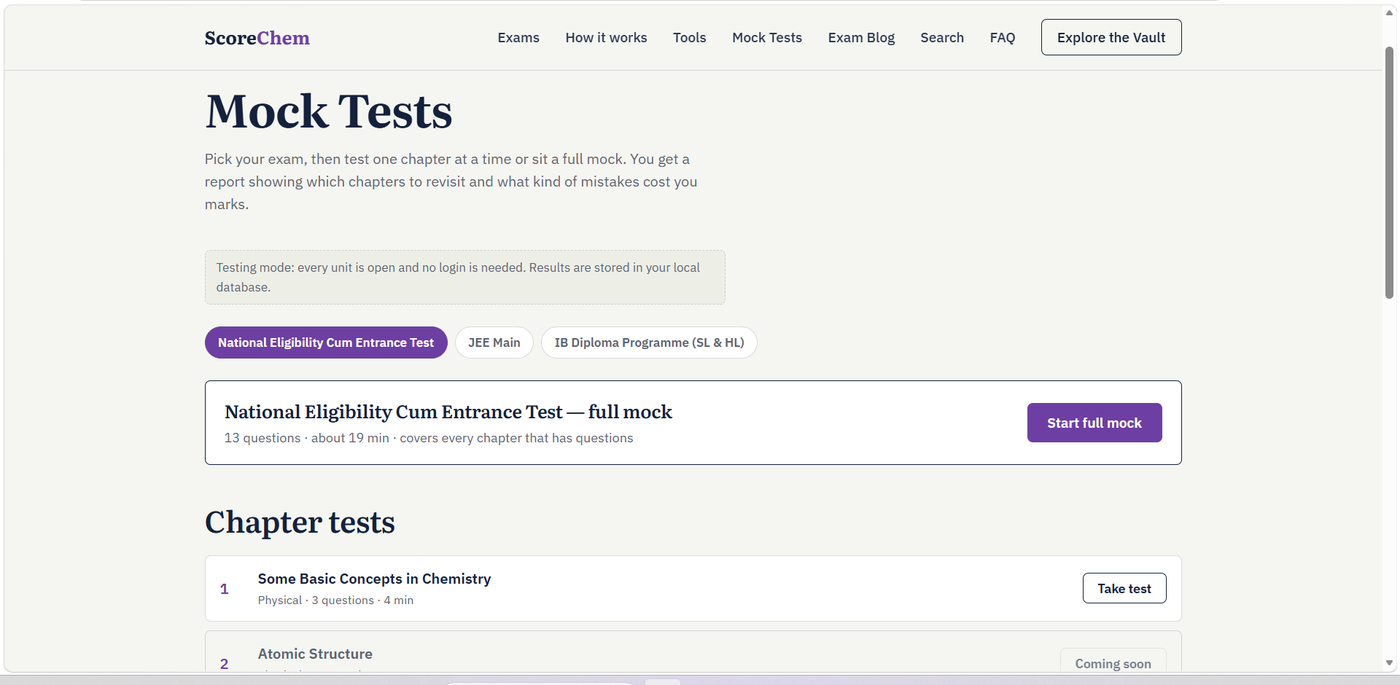
"Chapters, weakest first" — read this table before anything else
Once you finish, the review page sorts every chapter by how you actually did, weakest first, with marks, number correct, accuracy, and time spent sitting side by side. This ordering matters more than the raw score: a chapter where you got 40% in 2 minutes and a chapter where you got 40% in 12 minutes are failing for two completely different reasons, and the table puts both numbers right next to each other so you can see which is which.
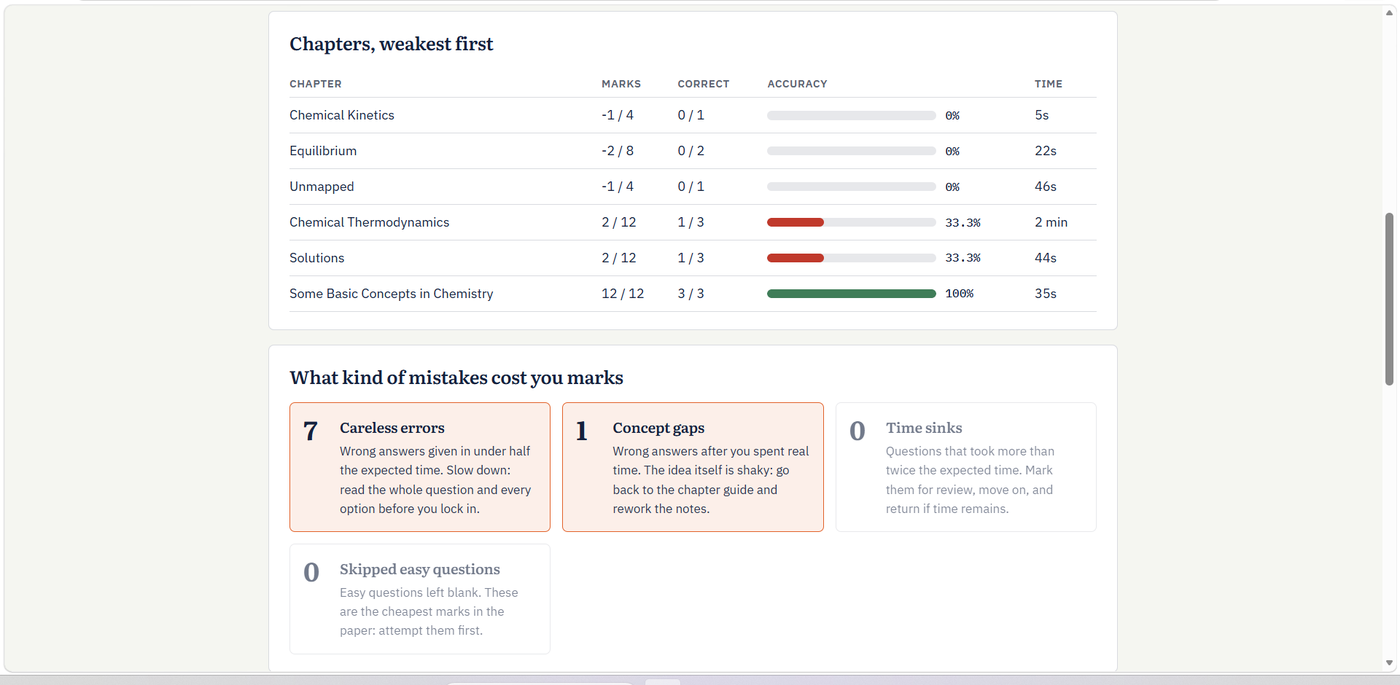
"What kind of mistakes cost you marks" — the part most people skip
Below the chapter table, your wrong answers get sorted into four buckets:
- Careless errors — you knew it, you picked the wrong option anyway
- Concept gaps — you didn't actually know the rule being tested
- Time sinks — you got it right, but it cost you minutes you didn't have
- Skipped easy questions — you left marks on the table that should have been free
These four need completely different fixes. A chapter full of careless errors needs slower, more careful reading on test day, not another pass through the guide. A chapter full of concept gaps needs exactly the opposite — go back to that chapter's guide and flashcards before you touch another mock. Mixing these two up is how students re-read chapters they already understand while the chapters they're actually weak in never get revisited.
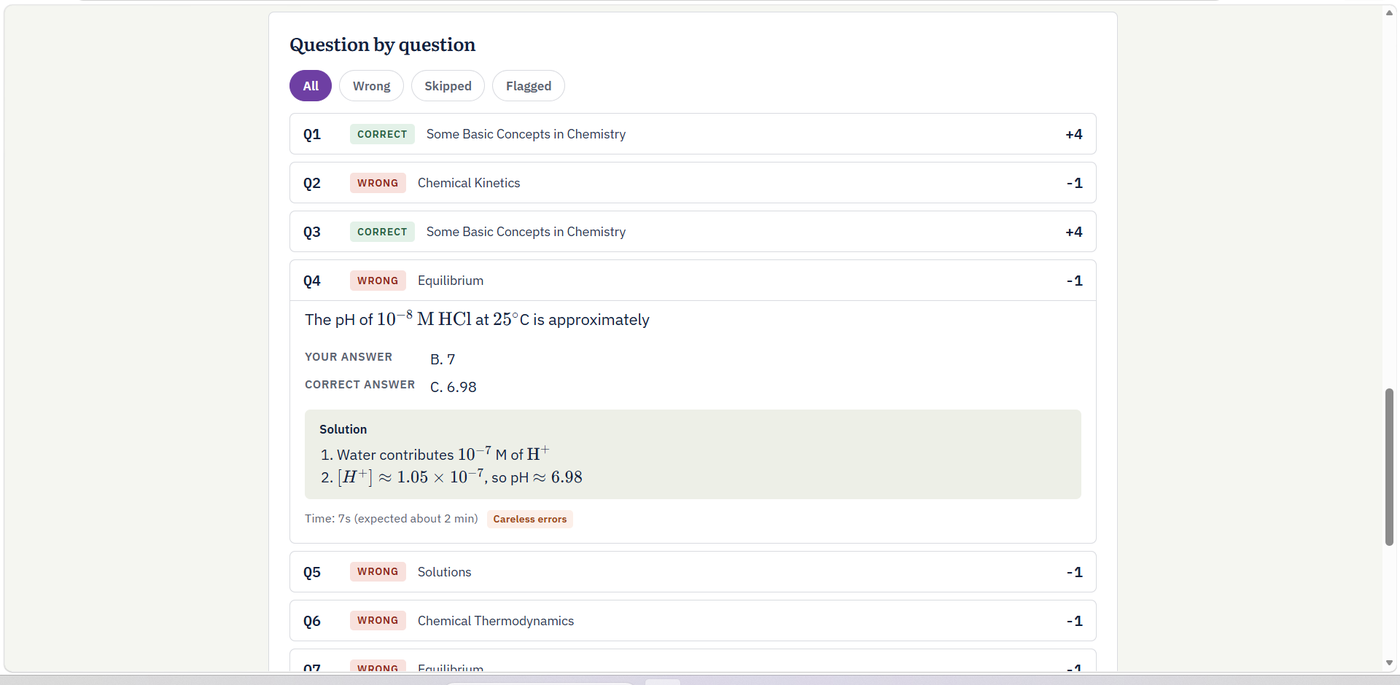
The question-by-question list is where the fix actually happens
Underneath both summaries sits a filterable, question-by-question breakdown: your answer next to the correct one, with the full solution steps for every question you got wrong. This is the only place on the review page that tells you what to do next rather than just what happened — reading the solution for a concept-gap question is a two-minute fix that a 40-minute re-read of the chapter guide can't replace.
Run one full mock, then spend real time on this page before you run the next one. The weakest-chapter table tells you where to look; the mistake-type breakdown tells you what to actually read when you get there.